
Balancing career growth with life outside of work isn’t just a challenge, it’s an ongoing experiment. As a father of five, I like to say having a kid is like treading water. You get good at it, then someone tosses you a baby! Suddenly, you’re learning how to swim all over again while holding a baby! Then they throw another! For the record, I don’t encourage baby tossing.
That’s been my reality: juggling project deadlines, soccer games, and school picnics while trying to grow professionally. I’ve learned a lot about stress, organization, and how to keep moving forward even when things feel overwhelming. These experiences have taught me that lasting success comes from maintaining a sustainable balance while working towards strategic goals.
Why Strategic Goal Setting Matters
Early in my career, I thought success was just about working hard and saying “yes” to everything; working overtime, getting that extra certification, etc. But without a plan, that approach leads to burnout. Implementing strategic goal setting changed the game for me. It gave me clarity, helped me prioritize, and made sure I was moving toward my goals. For young professionals, developing strategic goal setting skills also gives you the tools to really shine in performance reviews as well!
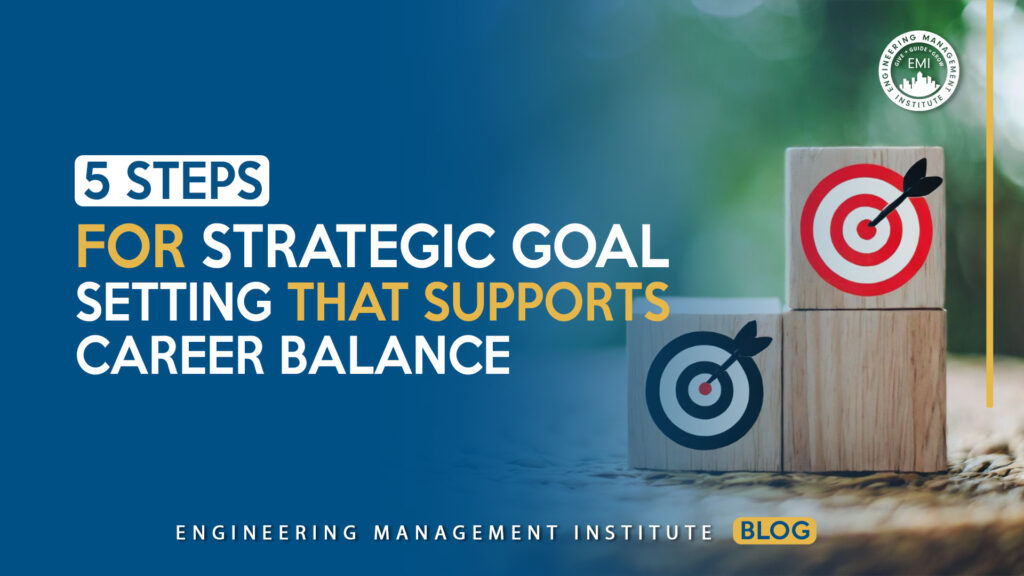
5 Steps to Setting Goals and Leading with Balance
Here’s what works for me:
-
Break Goals into Categories
I use three buckets:
Technical Goals: Certifications, licenses, and classes. There’s always more to learn in engineering. A variety and depth of certifications ensures I can express that to clients through proposals and meet essential project requirements.
Professional Goals: Where do I want to be in 5–10 years? What steps are within my control? Saying yes to company planning teams, presenting internally, and taking management courses all fit in here.
Leadership Goals: Harder to quantify, but just as important. Speaking at conferences, posting industry updates to LinkedIn, and building a culture of creativity and responsibility in my office. One of my favorite recent wins? Recording a podcast episode to share insights on ITS and how technology impacts various stages of project development. -
Make It Measurable
Technical goals are easy: pass the exam, earn the certification. Leadership goals? Not so much. I set targets like “Speak at two conferences this year” or “Post monthly on LinkedIn.” Strategic goal setting only works when I track my progress. Keeping me accountable.
-
Say Yes (Strategically)
Opportunities are everywhere, but not all of them align with your goals. I’ve learned to say yes to things that move me toward my professional and leadership objectives and politely decline the rest. Strategic goal setting helps filter these opportunities so your time and energy stay focused.
-
Schedule Balance
Balance doesn’t happen by accident. I block time for family and personal priorities just like I block time for work. If it’s not on the calendar, it’s probably not happening. For me, that means making sure I’m at the dinner table with my family and without my emails, even if it means finishing a project after bedtime. Creating a calendar based on personal and professional goals keeps work and life aligned.
-
Communicate Like a Leader
This one took me years to learn. Communication is a skill, not a personality trait. Early in my career, my emails were precise but cold. Now, I aim for clarity with warmth. Speaking in front of a crowd still makes me uncomfortable, but I’ve learned that leadership means connecting with people, not just delivering data. Communication is key when identifying strategic goals, which is often a collaboration, and when achieving them.
The Big Takeaway
Everyone’s priorities look different, and they change over time. Balance isn’t about taking a step back, it’s about prioritizing what matters most. Or, as Ron Swanson wisely said:
“Never half-ass two things; whole-ass one thing.”
Strategic goal setting empowers you to decide what’s most important to you, figure out the steps to get there, and commit to seeing it through.
About the Author
 Clarke Chauvin, PE, PTOE, PMP, is a Senior Project Manager at Neel-Schaffer, Inc., specializing in Intelligent Transportation Systems. He’s passionate about helping agencies deploy smarter solutions that improve the safety and efficiency of our roadways. Connect with him on LinkedIn.


