

Introduction
A couple of years ago, in Houston, an inspection of an entire roof perfectly exemplified why aerial analytics for engineers is such a potent tool in the AEC industry. The task was to check a large business premises following a significant storm.
Conventionally, this would have implied ladders, safety belts, and days of hand checks in hot weather. We instead used a UAV drone with multispectral terrain mapping and finished the survey prior to lunch.
The time saved was not the only thing that amazed me, but the level of safety and the quality of information that was obtained.
We took high-resolution photos which showed that there was minor membrane destruction which could not have been seen on the ground. That experience altered my perception of project planning.
To engineering managers, aerial analytics for engineers is not merely a trendy tool — it is a competitive edge that transforms field information into smarter choices.

Why Aerial Analytics is a Game-Changer
Management of engineering projects is a balancing act at all times. Budgets are lean, dates are hectic, and safety is not negotiable.
Combine the unpredictability of the physical locations and one can easily understand why conventional inspection processes are not quite effective.
This is the point where multispectral terrain mapping and remote sensing drones provide actionable insights for engineering managers.
- Speed: What could have taken days of manual surveying is now possible in hours. Having a drone, engineering teams can survey a whole location in one morning, which makes projects remain on track.
- Safety: It reduces the number of people who have to visit dangerous places such as roofs, unsteady ground, or having to climb high buildings.
- Precision: Multispectral terrain mapping and high-resolution images can identify hairline cracks, moisture intrusion, or uneven soil early.
In one of the infrastructure projects I was involved in, drainage problems were detected before construction work was initiated by using aerial mapping.
The insight gained at an early time saved me weeks of work and a considerable part of the budget. To managers, such foresight is like gold.
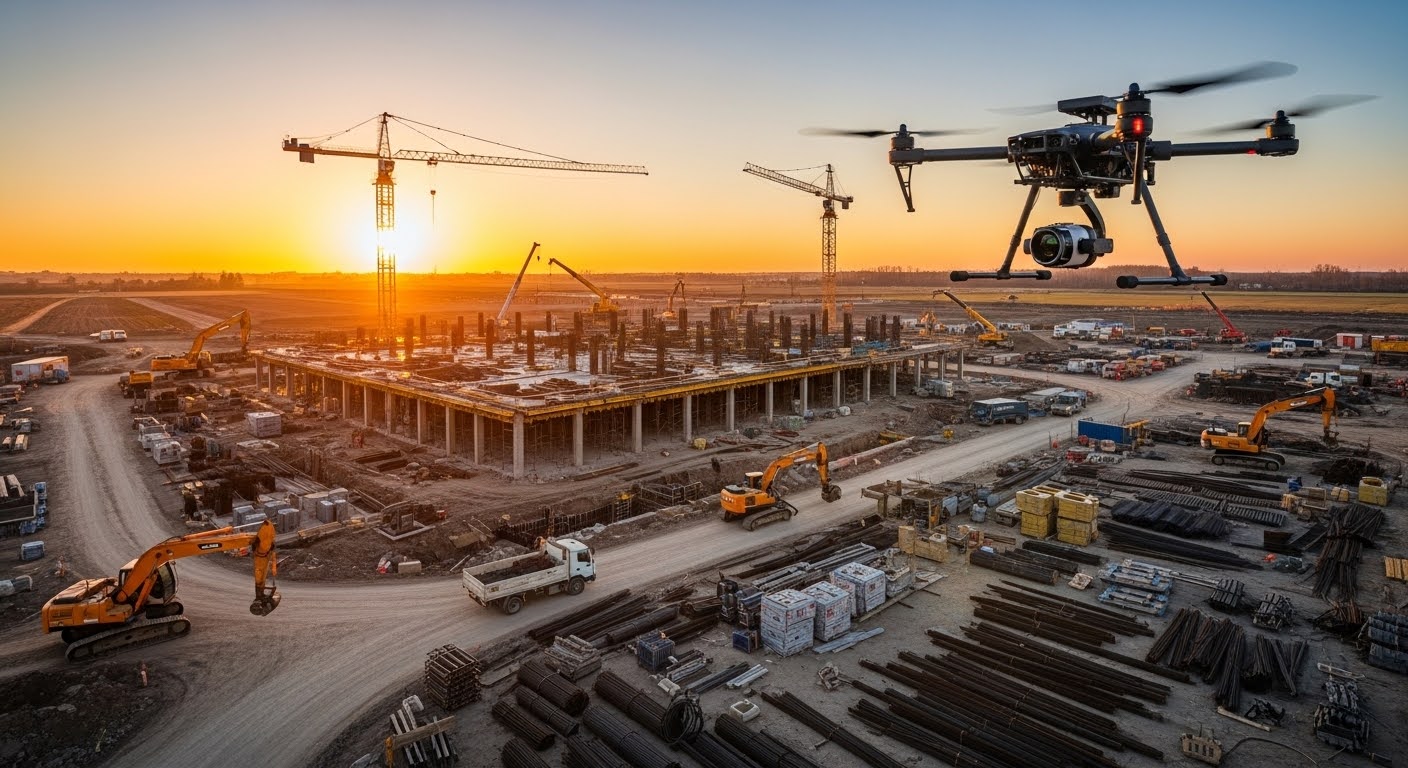
5 Ways Engineers Can Use Aerial Data
A. Roof & Structural Inspections
- Drones are ideal when inspecting roofs, towers, facades—where access would be risky or time-consuming.
- It is faster to scan unsafe areas or inaccessible zones.
Pro tip: Roof edges and seams are the areas that need to be closely observed. With aerial data, defects can be identified early.
B. Multispectral Terrain Mapping
In addition to visuals, multispectral data reveals what the naked eye is unable to see. Such as:
- Evaluating the stability and moisture of soil.
- Monitoring vegetation cover and erosion.
- Determining the locations of water pooling.
This information is invaluable for planning construction and environmental mitigation, particularly at major or sensitive sites.
Using NDVI (Normalized Difference Vegetation Index) imagery enhances multispectral terrain mapping, providing engineering managers with actionable insights for vegetation health, soil monitoring, and infrastructure planning.
C. Infrastructure Monitoring & Safety
In bridges, highways, industrial plants, and numerous other areas, aerial analytics provides asset visibility by:
- Identifying both early-stage faults and wear.
- Reducing unexpected downtime.
- Enhancing long-term maintenance planning.
The use of regular aerial inspection forms a historical record of data, making trend analysis much more reliable.
D. Data-Driven Strategic Planning
- Raw aerial data becomes powerful when translated into insights.
- Engineering leaders can use it to:
- Improve budget forecasting
- Optimize scheduling
- Better allocate resources
Teams are able to be more proactive and to plan beforehand rather than responding to issues with the confidence that is supported by actual data.
E. Integrating AI & Analytics
UAV data are now being mixed with AI-generated analytics using modern platforms, which help to:
- Anticipate risks before failure.
- Auto-measure and auto-report.
- Reduce manual analysis time
AI with aerial data does not replace engineers — it frees them to engage in higher-level decision-making.

Practical Tips for Engineers
Extracting value out of aerial analytics for engineers is not solely about flying a drone. It’s about using the data well. This looks like:
- Survey plans: Active construction sites might require regular scans, whereas stable assets can be surveyed on a regular basis.
- Checking calibration and data quality: Bad data means bad decisions, regardless of the sophistication of the tools.
- Dissemination of knowledge among teams: The findings should be accessible to shareholders such as field crews, engineers and managers.
In a case where expertise and equipment are not available in-house, outsourcing a professional vendor, such as DroneAsAService.com, can guarantee high-quality results without any unnecessary overhead.
The point to note: The sooner aerial analytics is incorporated into the working process, the greater the value it is going to bring.
Conclusion
Aerial analytics for engineers is no longer a niche technology. It has become a useful tool to the engineering managers that helps them make smarter, faster and safer decisions.
The advantages are difficult to overlook, with the saving of time on inspections, as well as the increase of safety and better strategic planning.
Aerial analytics enables teams to be proactive about problems instead of being reactive by converting field data into actionable insights. Whether in the context of infrastructure, construction, or even an industrial project, the approach can bring your operational efficiency, as well as long-term strategy, to a new level.
In a business that is characterized by close margins and high expectations, the advantage of aerial analytics could be your new edge.
About the Author

Patrick Maple is the Chief Editor at DroneAsAService.com, specializing in UAV inspections, multispectral terrain mapping, and aerial data analysis for construction, infrastructure, and surveying. He focuses on turning aerial intelligence into actionable insights that improve operational efficiency, safety, and strategic planning.


