Developing Leadership Skills in Civil Engineering – Ep 311

Twitter
Facebook
LinkedIn
Pinterest

Episode TCEP 311: Civil engineering leadership requires balancing technical expertise with strong people skills to grow effectively in the profession. This episode explores strategies for developing leadership traits, improving communication, and navigating early-career challenges in civil engineering. Listeners will learn how to thrive by embracing flexible roles and mentoring relationships.

What is Civil Engineering Leadership?

Civil engineering leadership involves guiding technical teams and managing projects while fostering collaboration, communication, and professional development. It requires combining engineering knowledge with interpersonal skills to solve problems and drive successful project outcomes.

[video_schema]

What are the most important civil engineering leadership skills?

Key leadership skills in civil engineering include communication, empathy, flexibility, and decision-making. Leaders must balance technical expertise with people skills to motivate teams and navigate complex projects successfully.

  • Effective communication tailored to different audiences
  • Empathy to understand team members’ perspectives
  • Flexibility in problem-solving and leadership style
  • Decisiveness with openness to new ideas

How can engineers develop civil engineering leadership capabilities early in their careers?

Early career engineers should seek mentorship, embrace diverse project experiences, ask questions respectfully, and practice active listening to build leadership skills. Being open to learning and gaining confidence through gradual responsibility helps develop effective leadership.

  • Engage with mentors and peers for guidance
  • Take on varied tasks to find passion and strengths
  • Communicate respectfully and with curiosity
  • Build confidence through on-the-job learning

Why is flexibility important in civil engineering leadership?

Flexibility allows leaders to adapt to varying project needs, team dynamics, and problem-solving approaches. It encourages innovation and ownership by empowering team members to contribute their best solutions, fostering a positive work environment.

  • Adapting leadership to different situations
  • Encouraging team autonomy and creativity
  • Enhancing collaboration through openness
  • Improving project outcomes through diverse perspectives

How can project communication be improved in civil engineering?

Improving communication involves understanding different styles and needs, delivering appropriate levels of detail, and choosing the right communication channels. Leaders should avoid overwhelming teams and tailor information for clarity and effectiveness.

  • Adapt communication to audience preferences
  • Balance the detail between executive summaries and deep dives
  • Use varied communication methods (email, phone, meetings)
  • Avoid unnecessary meetings for efficiency

What is a respectful way to challenge senior engineers?

A respectful approach includes being curious, asking questions to learn, acknowledging existing experience, and presenting ideas humbly. Creating a collaborative atmosphere encourages open dialogue and positive contributions from all levels.

  • Approach with genuine curiosity and respect
  • Listen carefully to senior perspectives
  • Question assumptions thoughtfully
  • Contribute ideas as part of team collaboration

How do multidisciplinary roles benefit civil engineering leadership?

Multidisciplinary roles expose leaders to various engineering fields, enabling better project management and scope awareness. This knowledge helps identify gaps, manage teams effectively, and improve integrated project delivery.

  • Gain a broad perspective across disciplines
  • Identify and fill project scope gaps
  • Facilitate communication among specialties
  • Lead diverse teams efficiently

What advice helps when feeling stuck or unfulfilled in one engineering role?

When feeling stagnant, it is important to communicate with supervisors, seek new assignments, and view challenges as opportunities for growth. If dissatisfaction persists over the long term, exploring different roles within the firm or industry can revitalize motivation.

  • Discuss concerns with mentors or managers
  • Be open to varied assignments
  • Maintain a positive mindset for learning
  • Consider career transitions if needed

Why is continuous learning important in civil engineering leadership?

Continuous learning equips leaders with up-to-date technical knowledge and the soft skills necessary to meet evolving project demands. It fosters confidence, adaptability, and the ability to mentor others effectively, enhancing team and organizational success.

  • Stay current with codes and standards
  • Develop interpersonal and leadership skills
  • Model lifelong learning for teams
  • Improve problem-solving and innovation

Elevate Your Leadership in Civil Engineering

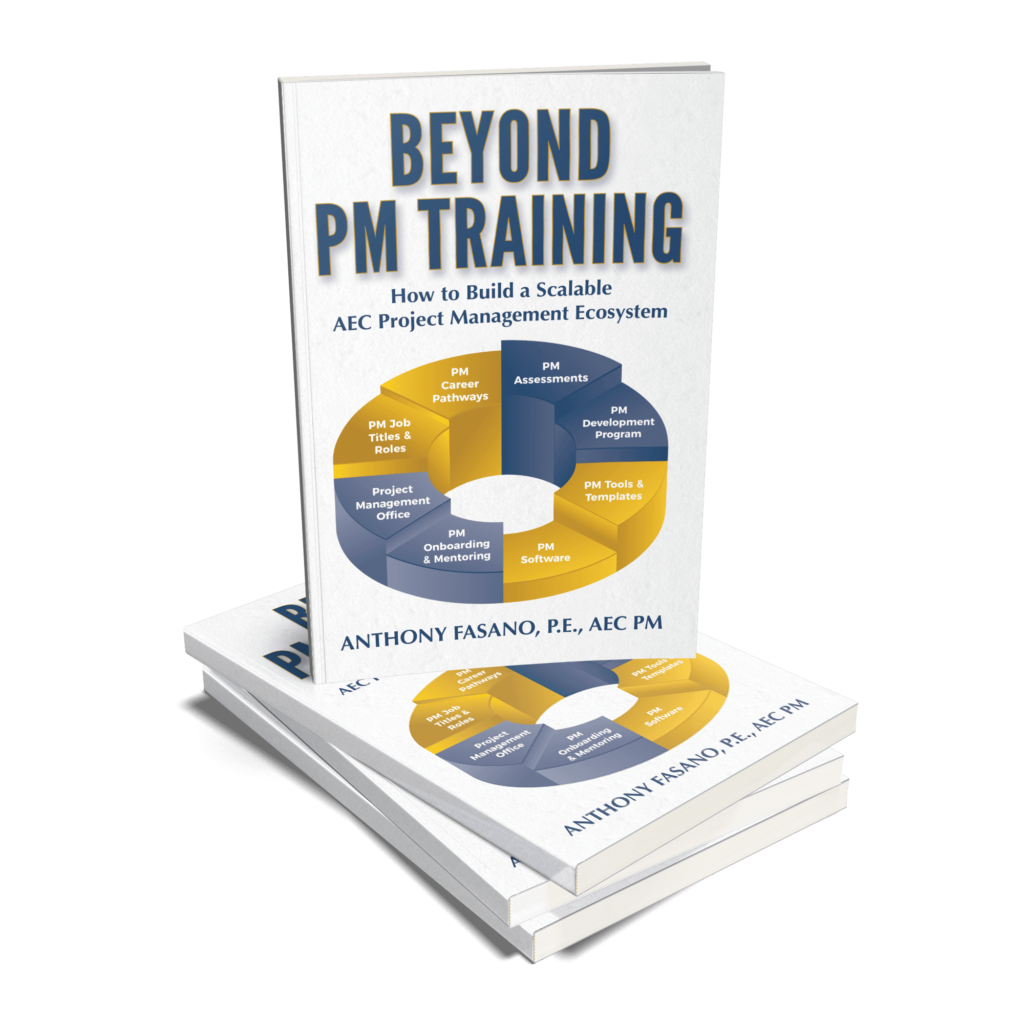
Join EMI’s AECPM Connect events to develop project management and leadership skills designed for civil engineers. Gain practical insights to lead teams and deliver successful projects.

Learn About PM Training For AEC Professionals →

Meet the Speakers

Anthony Fasano, PE, AEC PM, F. ASCE

Your Host

Anthony Fasano, PE, AEC PM, F. ASCE

Most AEC organizations are too busy to focus on attracting, developing, and retaining talented professionals, making it hard to grow. Through his work at EMI, Fasano utilizes a proven framework to help organizations, both public and private, build professional development plans, programs, and tools that help them attract, build, AND maintain strong teams and grow sustainably.

Fasano has written a bestselling book entitled Engineer Your Own Success (by IEEE-Wiley Press), and under his stewardship, EMI has built a massive content platform including 10 active podcasts, 3 YouTube channels, and a popular blog dedicated to helping AEC professionals become better managers and leaders.

Gregory Johnson, PE, PMP

Guest Expert

Gregory Johnson, PE, PMP

Water Discipline Leader at Colliers Engineering & Design

Greg Johnson is the Water Discipline Leader at Colliers Engineering & Design with extensive experience delivering complex infrastructure and water resource located on or near the water projects. In his role, he leads efforts supporting a wide range of dam, navigation, hydraulic, environmental, building, and transportation projects, overseeing design development, field inspections, and the preparation of technical reports, contract drawings, specifications, and cost estimates. Greg has played a key role in the analysis and design of large hydraulic structures such as locks and dams, cofferdams, fish passages, intake structures, trash racks, powerhouses, and penstocks. Through his work on critical infrastructure systems, he brings valuable leadership and technical insight into solving complex civil engineering challenges.
Richard Maloney, PE

Guest Expert

Richard Maloney, PE

Regional Discipline Leader for the Bridges and Structures Division at Colliers Engineering & Design

Richard Maloney is a Regional Discipline Leader for the Bridges and Structures Division at Colliers Engineering & Design. With more than 30 years of experience in structural engineering and project management, he leads teams delivering complex infrastructure projects for public and private clients. Richard oversees client relationships, project delivery, and the development of structural designs and specifications across a wide range of projects. His experience spans bridges, tunnels, dams, marine and waterfront structures, amusement structures, and utility infrastructure. Throughout his career, he has focused on guiding multidisciplinary teams and delivering resilient, technically sound solutions for large-scale civil engineering projects.


Anthony Fasano, PE, AEC PM, F. ASCE
Engineering Management Institute
Author of Engineer Your Own Success


Important Update:

We’ll be pausing our biweekly release schedule for The Civil Engineering Podcast for the time being. We invite you to continue learning with our other podcast shows:


We appreciate your continued support and look forward to bringing you more valuable content across our platforms.

Subscribe through your platform of choice:

Subscribe To Our Newsletter

And Get Custom Content Delivered To You Weekly

PM Training

engineering management lessons

Categories

TECC Sidebar Featured Final